Thanks for reading this post, and please leave a comment in the comment section down below.
Sunday, May 11, 2014
Element 117?
Hey everybody, I'm back again with another post on a new science discovery that will soon put a new name on the periodic table of elements. Before you read on, I have a question for you. If you could name an element on the periodic table, what would you name it? Please leave a comment in the comment section down below. Here's the article if you want to read more.
Science has confirmed the existence of a new element in the universe. Back in 2010, a joint collaboration between American and Russian scientists had officially created the atoms for this new element. The problem with this new element is its life span. The element is very unstable and exists for only fractions of a second before decaying. A fun fact about the element's discovery is that the scientists did not even see the actual element, but instead studied the decayed parts of the element and discovered elements 105 and 103, two of the most stable isotopes on the table. The current name for this element is Ununseptium, but the name could change once the element is officially added to the table.
I found this article to be interesting and very informative. I like that countries are collaborating to further science, even though we may not all have the best history with each other. I hope that they do keep the name for element 117 because it is a clever name. I believe that this element will also be put on the table, but not before next year.
Thanks for reading this post, and please leave a comment in the comment section down below.
Thursday, April 17, 2014
The Wave
What's up everybody? I'm back once again with a new post this week. Since it's April and most people are on Spring break and during this week of fun in the sun going to the beach, I wanted to talk about waves, and yes I may include something about ocean waves. Sadly, ocean waves are not the only waves out there in the world of science, so I will also talk about the other types of waves. I have to make sure you people get some kind of knowledge out of this, so I will teach the different parts of a wave. Before we dive into the world of waves, quick question: what is your favorite beach that you have been to? Please leave your comments in the comment section.
Well first things first, what is a wave? A wave is a rhythmic disturbance that carries energy, but a wave can't carry matter. There are two main groups of waves, mechanical and electromagnetic waves. Mechanical waves are waves that need a medium or a material through which a wave travels. Two types of mechanical waves that are most common are transverse and compressional waves. In transverse waves, the energy travels perpendicular to the direction of energy transport, but in compressional waves, the energy travels parallel to the energy being transported. An electromagnetic wave does not need a medium too, like radio and ultraviolet waves.
Now that we know what waves are and some different types of waves, let's talk about the different parts of a wave. The top of a wave is called the crest. The crest is the highest point of the wave. The next part of the wave is the trough. The trough is the lowest point of a wave. The wavelength is the distance measured from two crests or from two troughs. Frequency is the measure of how many wavelengths pass through a given point in 1 second. The closer the wavelengths are to each other, the higher the frequency, and the farther apart the wavelengths are from each other, the lower the frequency. Finally, the amplitude is half the distance between a crest and a trough.
Thanks for reading this week's post, and please leave a comment in the comment section down below.
Well first things first, what is a wave? A wave is a rhythmic disturbance that carries energy, but a wave can't carry matter. There are two main groups of waves, mechanical and electromagnetic waves. Mechanical waves are waves that need a medium or a material through which a wave travels. Two types of mechanical waves that are most common are transverse and compressional waves. In transverse waves, the energy travels perpendicular to the direction of energy transport, but in compressional waves, the energy travels parallel to the energy being transported. An electromagnetic wave does not need a medium too, like radio and ultraviolet waves.
Now that we know what waves are and some different types of waves, let's talk about the different parts of a wave. The top of a wave is called the crest. The crest is the highest point of the wave. The next part of the wave is the trough. The trough is the lowest point of a wave. The wavelength is the distance measured from two crests or from two troughs. Frequency is the measure of how many wavelengths pass through a given point in 1 second. The closer the wavelengths are to each other, the higher the frequency, and the farther apart the wavelengths are from each other, the lower the frequency. Finally, the amplitude is half the distance between a crest and a trough.
Thanks for reading this week's post, and please leave a comment in the comment section down below.
Monday, March 17, 2014
Newton's Law
Hey everyone, I'm back this week with a new post for you all and this one will be a short one. Before we begin, I have a question for you: do you think that there is a way for The Three Laws of Motion to be broken, and if so how? Leave a comment in the comment section. Ok, if you have not figured it out let, I'm going to be talking about Newton's Laws of Motion. In this post, I will be reviewing all three laws of motion and I'll make sure to give you examples.
The first law of motion states that an object at rest tends to stays at rest. The object will remain at rest until an unbalanced force acts upon that object. If the object is in motion, it will continue to stay in motion in a straight line. An example for this law is when a person kicks a soccer ball. The ball is on the ground and is not in motion, but when someone kicks the ball, the ball is in motion and will continue to be in motion until another force(s) acts upon the ball, in this case air resistance and gravity.
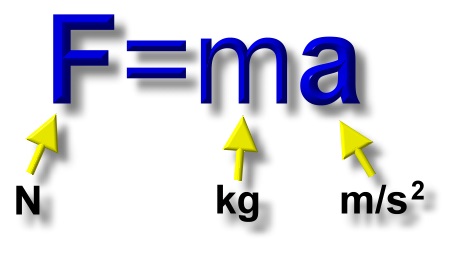
Now that we've covered Newton's First law, lets talk about the second law. Newton's second law of motion states that the acceleration of an object is dependent upon two variables, the acceleration of the object and the mass of the object or F=MA. F stands for force, M stands for mass, and A stands for acceleration. This formula will allow you to calculate how much force it would take to move an object by multiplying the mass of an object by the acceleration of the object.
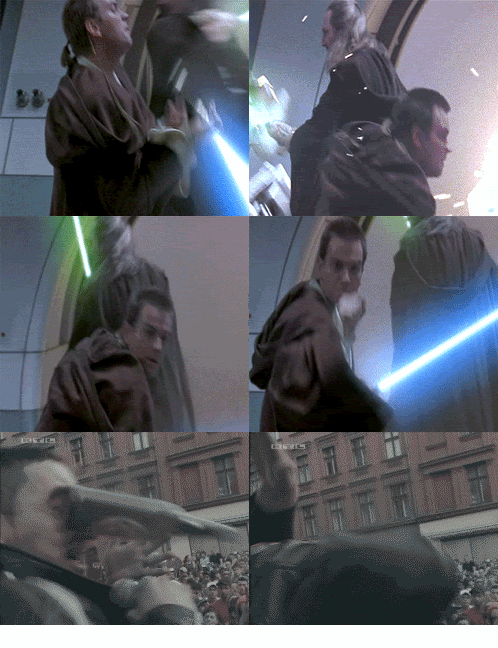
Finally, Newton's third law of motion states that for every action there is an equal and opposite reaction. The statement means that in every interaction, a pair of forces is acting on the two interacting objects. This law is why birds can fly and how we got people to the moon. Another example is fish swimming in water. A fish uses its fins to push water backwards. But a push on the water will only serve to accelerate the water. Since forces result from mutual interactions, the water must also be pushing the fish forwards, propelling the fish through the water.
Thanks for reading this post, and please leave a comment in the comment section down below.
The first law of motion states that an object at rest tends to stays at rest. The object will remain at rest until an unbalanced force acts upon that object. If the object is in motion, it will continue to stay in motion in a straight line. An example for this law is when a person kicks a soccer ball. The ball is on the ground and is not in motion, but when someone kicks the ball, the ball is in motion and will continue to be in motion until another force(s) acts upon the ball, in this case air resistance and gravity.

Now that we've covered Newton's First law, lets talk about the second law. Newton's second law of motion states that the acceleration of an object is dependent upon two variables, the acceleration of the object and the mass of the object or F=MA. F stands for force, M stands for mass, and A stands for acceleration. This formula will allow you to calculate how much force it would take to move an object by multiplying the mass of an object by the acceleration of the object.
F=MA
Finally, Newton's third law of motion states that for every action there is an equal and opposite reaction. The statement means that in every interaction, a pair of forces is acting on the two interacting objects. This law is why birds can fly and how we got people to the moon. Another example is fish swimming in water. A fish uses its fins to push water backwards. But a push on the water will only serve to accelerate the water. Since forces result from mutual interactions, the water must also be pushing the fish forwards, propelling the fish through the water.
Thanks for reading this post, and please leave a comment in the comment section down below.
Sunday, March 9, 2014
Gravity
Hey everybody, I'm back again for a new post this week. Quick question though, did you like the movie Gravity? Please answer this question in the comment section down below. Ok, this week we are going to be talking about a special type of force that I hope we are all aware of. It is the force that keeps us on the ground, and keeps the planets orbiting the sun, and in no uncertain terms lets us drop the beat. The week, I will be talking about gravity.
Gravity is the force that is a push or pull upon an object. This is what keeps the planets in orbit around the sun because the sun's gravitational pull is holding the planets in its orbit. Another example that's more down to Earth is if you had a box blocking your way, what would you do? Well, you would hopefully push the box out of the way. Gravity is also the most influential force in the universe. Without gravity, you and all other forms of matter would float pointlessly around in space.

Now that we know what gravity is, let's talk about the two men that showed us what gravity is and it contribution to science. The first person to discover gravity is a man named Galileo. If his name is familiar to you than that's a good thing because he is the man who created the experiment where you drop two objects at equal level so that they would both fall to the ground at the same time. Surprisingly, the day that Galileo died, Sir Isaac Newton was born! Isaac Newton is the man that discovered that gravity's strength on an object depends on its mass and distance.
Ok, now that we know what gravity is and how it is important, let's now talk about mass, weight, distance, and see how they all play a role in how gravity affects you. Mass is how much space an object takes up. Distance is how far an object is from a starting point. Weight is how much force is to be acted upon the object, and this is why your weight changes on different planets.
Thanks for reading this post, and please leave a comment in the comment section down below.
Sunday, March 2, 2014
Use The Force
Hello everybody, I'm back again with a new post for this week and I hope that I can get back into that post per week routine, but no promises. Well, this week we will be talking about something that all you Star Wars fans will be quite familiar with. We will use the force of our minds and explore what force is and how it affects the world around us. Now that we know our topic for this post, let's begin.
Force is a push or pull that is acted upon an object. Force is all around and you may not know it's there. One form of force that we are all hopefully aware of is the force of gravity which keeps us on the ground. Another type of force is action at a distance force. This type of force is what keeps the earth in a constant orbit around the sun. Another type of force is contact force. An example of this is when two cars collide into each other and one car is bumped back. These are some of the examples of force that you can see every day. Force also has a special type of measurement as well. When you measure force you measure it in Newtons. The reason why it is named Newtons is because Sir Issac Newton was the first person to discover force and how force works on objects. He also created the three laws of motion. Finally there is thrust. Thrust is the reaction force that is applied on a surface in a direction perpendicular or normal to the surface.
Now that we know what Force is and how it is measured, let's talk about balanced and unbalanced force and how you can tell them apart. Balanced force is when an object is at rest or in a constant speed and direction. These characteristics are of balanced force, but who wants to stay at a constant speed or stay in the same direction? Let's say that you have the need for speed, so what do you need to go faster? It's unbalanced force. Unbalanced force is when the force (push or pull) on the object is greater than the other forces acting upon it. Depending on where this greater force is applied, you would travel in that direction, may it be up, down, left, right, forwards, or backwards.
Now that we know what balanced and unbalanced forces are, let's now learn about centripetal force. Centripetal force is when an object is in a circler motion moving at a constant speed. An example of this is when a motorcycle is spinning in a metal cage. The reason why the motorcyclist is able to do the spins in the cage is because of centripetal force.
Thanks for reading this post, please leave a comment in the comment section down below.
Force is a push or pull that is acted upon an object. Force is all around and you may not know it's there. One form of force that we are all hopefully aware of is the force of gravity which keeps us on the ground. Another type of force is action at a distance force. This type of force is what keeps the earth in a constant orbit around the sun. Another type of force is contact force. An example of this is when two cars collide into each other and one car is bumped back. These are some of the examples of force that you can see every day. Force also has a special type of measurement as well. When you measure force you measure it in Newtons. The reason why it is named Newtons is because Sir Issac Newton was the first person to discover force and how force works on objects. He also created the three laws of motion. Finally there is thrust. Thrust is the reaction force that is applied on a surface in a direction perpendicular or normal to the surface.
Now that we know what Force is and how it is measured, let's talk about balanced and unbalanced force and how you can tell them apart. Balanced force is when an object is at rest or in a constant speed and direction. These characteristics are of balanced force, but who wants to stay at a constant speed or stay in the same direction? Let's say that you have the need for speed, so what do you need to go faster? It's unbalanced force. Unbalanced force is when the force (push or pull) on the object is greater than the other forces acting upon it. Depending on where this greater force is applied, you would travel in that direction, may it be up, down, left, right, forwards, or backwards.
Now that we know what balanced and unbalanced forces are, let's now learn about centripetal force. Centripetal force is when an object is in a circler motion moving at a constant speed. An example of this is when a motorcycle is spinning in a metal cage. The reason why the motorcyclist is able to do the spins in the cage is because of centripetal force.
Thanks for reading this post, please leave a comment in the comment section down below.
Sunday, February 9, 2014
Acceleration
Hey guys, back again with a new post for you, but before we begin I'll ask a quick question. Would you or would you not like to fly a fighter jet? Please leave a comment in the comment section. So, this post is going to be on a topic that all you Forza fans are going to love. It is what makes race car driving fun, causes screams of fear as you plummet to the bottom of a roller coaster, and is one the reasons why most people would not want to jump out of a plane. Did you guess it yet? Well if you didn't, it's acceleration.
Acceleration by definition is the speed at which an object changes its velocity. When a car is driving down south on the highway at 60 miles per hour and then the car speeds up to 70 miles per hour, this is an example of acceleration. Acceleration can also be measured by a simple formula. Also, here's a video to help you understand this formula. There are three types of acceleration: speeding up, slowing down, and changing direction.
Now that we know what acceleration is, let's learn the difference between positive and negative acceleration. One way to accelerate is to accelerate positively. This means that an object speeds up. An example of this is a kid on a skate board ramp. On the ramp, the kid is not moving, but when he starts to go down the ramp, he accelerates positively, or speeds up. Another type of acceleration is negative acceleration. This is when an object decelerates (or slows down its acceleration). If a car dives at 60 miles per hour, but then slows down to 50 miles, it has decelerated.
Finally, lets learn how acceleration is graphed. The X axis of the graph is reserved for time. The Y axis displays intervals of acceleration. The line on the graph represents the acceleration of the object. A U shape of a graph represents positive acceleration, a n shape on a graph represents a decrease in acceleration, and a straight line represents no change in acceleration.
Thanks for reading this post, and please leave a comment in the comment section down below.
Monday, January 20, 2014
Motion, Are You Moving?
Hey viewers, back again with a new post, and this may just get you on your feet and start moving at high speeds. I hope that this post will get you in motion, but don't displace(ment) your coffee cups just yet because we are going to learn about speed, motion, velocity, and some other fun and interesting things about motion! So, sit down, get comfortable, and get ready to be taken on a wild ride as we learn about motion and how it works.
Before I can start talking about speed and velocity and average speed, we must first understand what motion is. Motion is the action or process that moves an object. All matter in the universe is in motion, from the planets orbiting the sun to a single blade of grass growing on a hot summer day. When you kick a soccer ball, that ball is in motion as it flies through the air when you try and score a goal, and let's not forget the goalie is in motion too as he tries to stop the ball from going in. Even you, yes you my good friend are also in motion at this very moment. When you walk or talk or even blink, you are in motion.
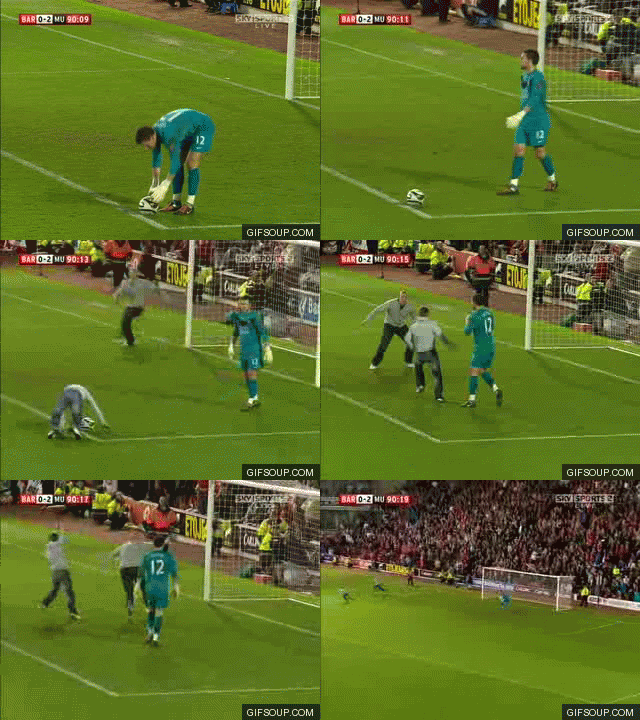
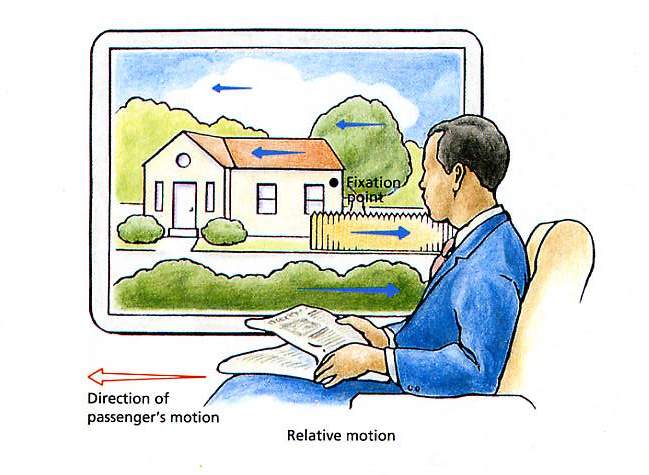
Now that we know what motion is and have many examples, let us learn how we know that an object is moving or has moved in a scientific way. To know if an object has moved, we need to know about its relative motion and we need a reference point. A reference point is where an object is at before it moves, for example, if you are in a race, you know that there is a starting line and a finishing line; this means that your reference point is the starting line, and based on far you go, that would be your relative motion from the starting line to the point that you stop at.
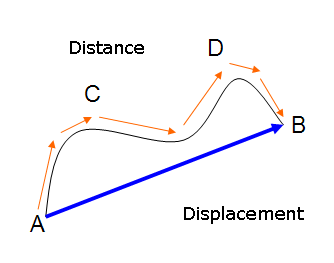
Now that we know that motion has occurred, lets talk about distance and displacement, and how they are different. Distance is the length of the path that you take to get from one place to another, and here is an example for you. You take your car from your house to the Ikea in the city, and to get there, you must drive 160 miles. Now displacement on the other hand is between the two locations, and here are some examples of displacement and distance.
Now that we have finished distance and displacement, lets talk about speed. Speed is how fast an object is moving in a certain time. The mathematical formula for finding speed is distance divided by time or S= D/T. Instantaneous speed is how fast an object moves at a certain point in time, but on the average speed is how fast an object is moving throughout the total distance traveled.
Ok, let's now finish this post by talking about velocity. Velocity is the measure of how fast an object is going in a certain direction. To measure velocity, you need two pieces of information to know what the velocity of an object is. First, you need to know what the speed of the object is and second, the direction the object is traveling in. A time that you would need velocity is when you are trying to find out how long it will take you to travel from your home to your local shoe store.
Monday, December 16, 2013
Isaac Newton
Hey guys, back again with a new post for you all. Well great news, we are now done talking about atoms and chemicals and we are now going to talk about something completely new. Before we begin let me ask you a question. Have you ever wondered why you must study calculus, learn the three laws of physics, and why we can see the planets in such great detail? Well, you can thank or hate Sir Isaac Newton. Now that we know who we're talking about today, let's learn more about this interesting man.
Cambridge University
Isaac Newton was born on Christmas Day 1642 in Woolsthorpe-by-Colsterworth, England. You may also see his birthday on January 4, 1642, and the reason why you would see Sir Isaac Newton with two birthdays is not because he was born on a leap year. The reason is that during this time period there were two calendars used in this time period, the Julius and the Gregorian calendar. Well, ok you think that is interesting, wait till you hear the next part of his life's story.
Isaac Newton was also born premature. In those times, being born premature would almost insure that you would die due to the lack of modern technology. Another major problem facing the young Newton is that his father died three months before his birth, and his parents were very poor. With these two factors in play, Isaac Newton had no chance of surviving, but he somehow did. The next major obstacle for him is that his family was poor and his mother could not afford his education, but a weird stroke of fate got him the resources needed for his education. Isaac Newton's mother married a sixty plus year old man named Reverend Barnabus Smith when Isaac was three years old. Because of his mother's choice, Newton was able to get the education he needed to go to Cambridge University and work on his more important pieces of science later on in life. On the flip side, Isaac Newton had to live with his grandparents on his mother's side. He would not see her for some time until the next major disaster befell him.

Cambridge University
In 1653 after the death of Isaac Newton's mother's second husband, she yanked the young Newton out of school to become a farmer. Luckily for him, he was a terrible farmer and returned to school at King's School at Grantham. After years of studies he finally made it into Cambridge University in June 1661. During his time at Cambridge, he got a Bachelors degree without honors or distinctions. Then, a tragedy of epic proportions struck the school and forced it to close its gates for two whole years.
In 1665, a plague hit the schools and it was forced to close its doors for two whole years. Isaac Newton then had to return back home. During this time, he made some remarkable discoveries. It was during this time, he created his 'method of fluxions' or better known as calculus. So, he is the reason you will or already have sleepless nights trying to learn this "fun" mathematical principle. He also created his theory on light and his theory on planetary motion. His most famous piece of scientific discovery was his theory of gravity.
After many more discoveries, he was elected President of the Royal Society in 1703 and was reelected every time before his death on March 20, 1727. He was also knighted by Queen Ann in 1705 for some work he did for the Royal Mint. He finally died on March 20, 1727 in London. He was buried at Westminster Abbey. He is one man that has truly changed science forever.
Thanks for reading my post, please leave a comment in the comment section down below, also check my ten facts about Isaac Newton.
- Isaac Newton was very religious
- He believed that he committed a sin by eating an apple at church
- He stuck a needle in his eye
- He worked for the Royal Mint
- He was knighted by queen Ann for his work at the mint
- He had no children
- He never married
- He created the first reflecting telescope
- He was able to predict the flight pattern of Halley's comet correctly
- Was known to have two major temper tantrums in his entire life
Sunday, December 8, 2013
The Transfer of Heat
Hey guys I'm back again with a new post for you all! Well, since its Diciembre and for those in the northern hemisphere it's a bit on the cold side, this post will be on a fun new topic. This topic keeps you warm, it has three ways of transfer, and you can't live without it. If you haven't figured it out it, it's heat! Now that we know what our topic is for today, get in your blankets and turn up the heat, because I'm going to talk about HEAT!
Before we can learn anything about heat, we must learn what heat is. Heat is the transfer of thermal energy from object to object when the objects are of a different temperature. Heat is also one of the major reasons why life can survive and thrive on this planet, because without heat, we would not be able to cook food, clean clothes, wash dishes, and we would not be able to survive without it. Heat keeps us warm, keeps us clean, and is a major driving force of life. Now that we covered what heat is, let me tell you a secret. Heat can be transferred, and there are three ways that can happen.
The first type of heat transfer is conduction. Conduction is when heat is transferred from one object to another by direct contact. This type of heat transfer occurs mostly with solids and is best seen when cooking. Here is a real life example. You ( the cook) are making a nice hot pot of tomato soup. To get the soup to heat up, you turn the stove's temperature from low to high. As the heat stays on, the heat from the stove is transferred to the pot which then heats the soup in the pot. By the way, pots are made of metal because metals are conductors of heat. Conductors are objects that transfer heat energy well from one object to another like water and metals, but insulators like feathers and plastic are not good conductors because they reflect heat rather than absorb it. This is why you stay warm when you are wrapped up in a blanket.
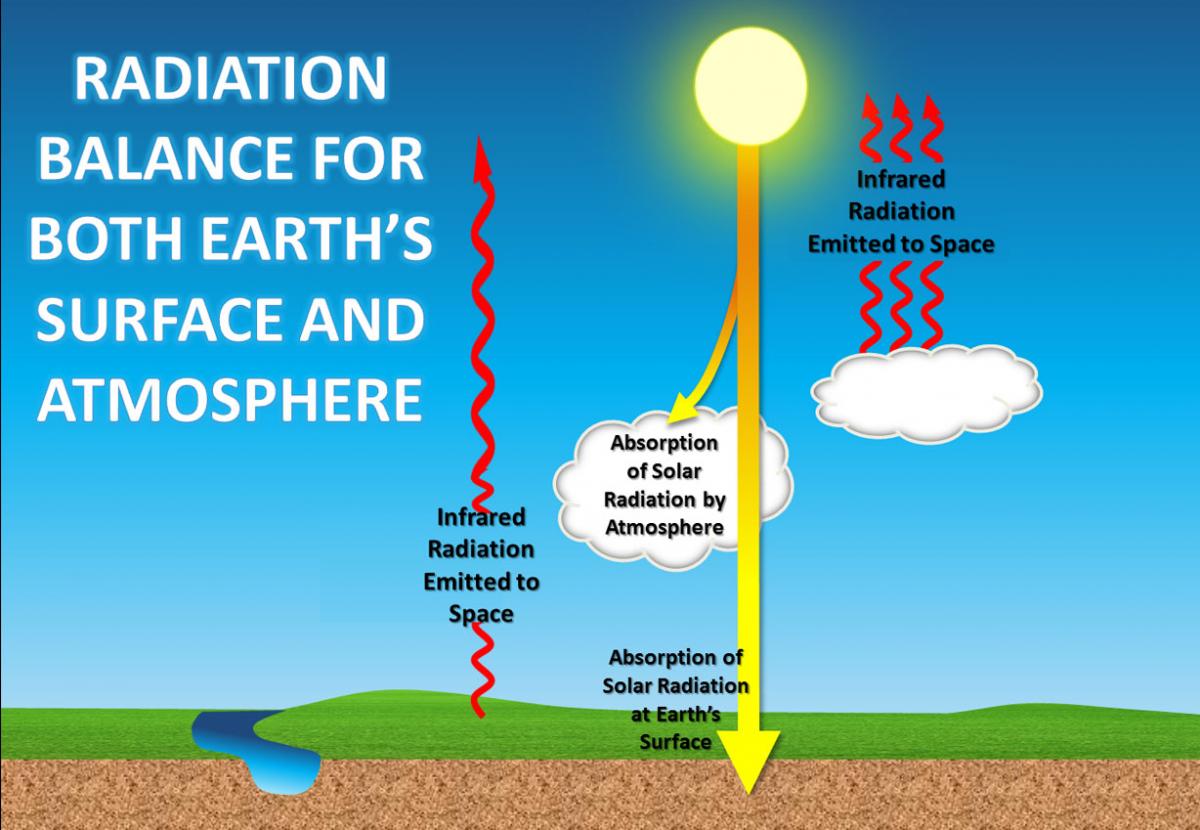
The next type of heat transfer is radiation. Radiation is when heat is transferred through electromagnetic waves. An example of this is the sun. When you are outside on a hot summer day, and you notice that your ice cream has started to melt, but you haven't licked it: this is due to electromagnetic waves. The waves travel through the atmosphere and then travel through the ice cream causing it to melt. Pretty cool stuff right, but we still have one more to talk about.
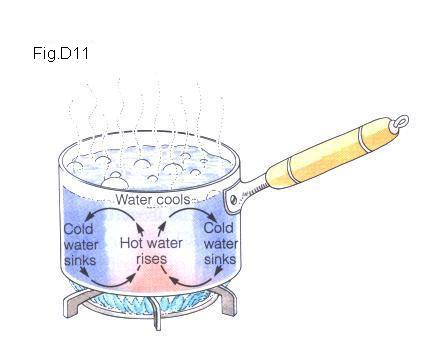
The final way that heat can be transferred is convection. Convection is the transfer of energy by the movement of liquids and gases. An example of this form of heat transfer is when you have a pot of boiling water. The hot water at the bottom of the pot rises to the top of the pot where it gets cooler, and due to the water getting cooler, it sinks back to the bottom of the pot where the process repeats itself. This is why you should put heating vents near the floor. The reason is because heat rises, so putting the heat near the ceiling is not a good a idea, because the heat would only heat the top of the room and not the bottom.
Thanks for reading this week's post and also check out this video about heat transfer. Please leave a comment in the comment section down below.
Sunday, December 1, 2013
Antiboitics NOT for kids?
Hello, I'm back again and I have a new post for your enjoyment. Before I tell you what the article is about, let me ask you a question. Would you stop using antibiotics because of these new superbugs that have been just discovered? If you haven't figured it out yet, the article is about new guidelines that the CDC is trying to enforce. These new guidelines would make it harder for doctors to prescribe antibiotics to children! Ok, before you go and start a riot over these new guidelines, let's all learn why this is happening in the first place.
The CDC has just released new guidelines that would make it more difficult for kids to be prescribed antibiotics. They have released these new and controversial guidelines for a few different reasons. The first one, which is their main concern, is that antibiotics are being overly prescribed to patients that don't have a bacterial infection at all. Many children who are prescribed antibiotics have ear or sinus infections, which are often caused by a virus and not by bacteria. Since you can't kill a virus with antibiotics, it is a futile effert to try and fix the situation. The best way to fix the problem based on new CDC guidelines is to let the virus run its course. Anther reason for the new guidelines is so that doctors can stop the development of super bugs (bacteria that is immune to antibiotics). The over prescription of antibiotics and people being negligent and not taking the full course of the medication and stopping when they feel better has caused certain strains of bacteria to evolve and become immune to certain antibiotics. 

Another major problem with antibioctics is that it has some negative side affects in both children and adults. The first one is that antibiotics kill probiotics or bacteria in your digestive system needed to break down certain foods. Without these good bacteria, people have reported stomach aches, nausea, shakes, low blood sugar, vomiting, and diarrhea. Another major problem with antibiotics is that your body can become resistant to the medication, which means that when you take the antibiotics, the body rejects the medication and the infection that you have will continue to grow.
After all this, I find these new guidelines to be a great idea and should be a great benefit to the publics' overall health. I found it funny, but also sad that doctors are giving children antibiotics for what is most likely a virus and not a bacterial infection. This fact alone tells me that doctors have become lazy and are using antibiotics as a way to give parents a way to make them feel good that their child will get better, and also help drug companies make their bottom line. With these new guidelines, it would make it harder for doctors to use antibiotics as a scapegoat and it would make doctors have to do their work more diligently.
Thanks for reading this week's post, and please leave a comment in the comment section down below.
Sunday, November 17, 2013
Potential and Kinetic Energy
Hey everybody, I'm back again with a new blog post and this one a bit different from the rest. I think that it's time to move on from the elements and matter and its states. It's time to talk about energy! In this new post, I will be talking about potential and kinetic energy and how they keep things moving.
To understand potential and kinetic energy, we must understand what energy is. Energy in a nut shell is the thing that makes other things happen. An example of this is when you kick a soccer ball, the soccer ball moves and does not stay in the same position that it was in before you kicked it. Most of the time, you can't see energy. Energy also can't be created or destroyed, but it can be transferred or stored by an object. A quick fact: the Earth's main source of energy is the sun.

Now that we have touched base on what energy is, let's talk about potential and kinetic energy. Potential energy is the energy an object has due to its position, shape, and the condition of the object. Kinetic energy on the other hand is the energy an object has due to its motion. The amount of kinetic energy depends on the object's speed and mass.
This all may be a little bit hard to understand, so I will give you a real life example to help you take in all this information. There is a five foot book shelf with two books on the shelf. One book on the shelf weighs one pound, and the other book weighs two pounds. The book that weighs two pounds has more potential energy because it has more mass, which means that it will have more kinetic energy if the book would leave its potential state. Now that we have the books on the shelf, let's see what happens when we bring them down.
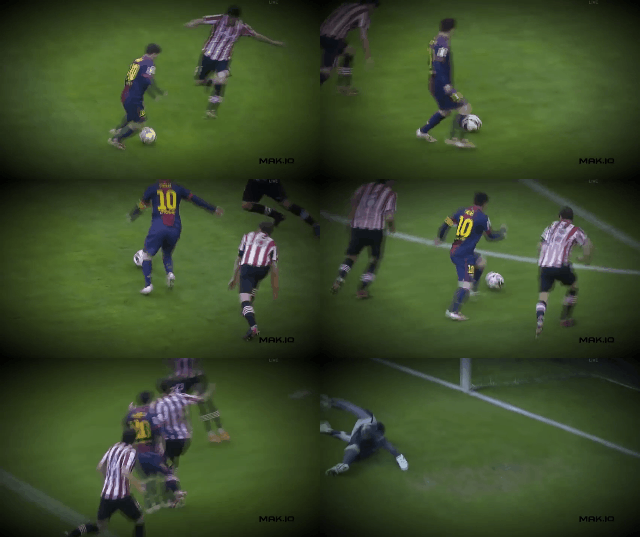
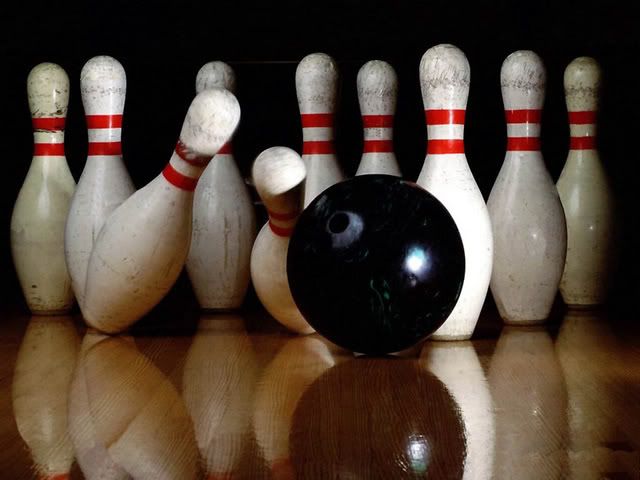
Now that we know that the books have the potential energy, let's say that a person were to bump right into the book shelf. The books would then fall off the shelf and land on the floor. This is an example of kinetic energy, but let's make things a bit more interesting. Let's say that one book hit a lamp as it crashed to the ground and the lamp fell over. When that happened, the kinetic energy from the book was transferred to the lamp. Kinetic energy can be transferred from one object to another when the two objects collide. This same transfer of kinetic energy can be seen when a bowling ball hits the pins and knocks them over.

Thanks for reading the post. Please leave a comment in the comment section down below.
Subscribe to:
Posts (Atom)